Regional and channel views
Different buyers need different evidence before the same part can move.
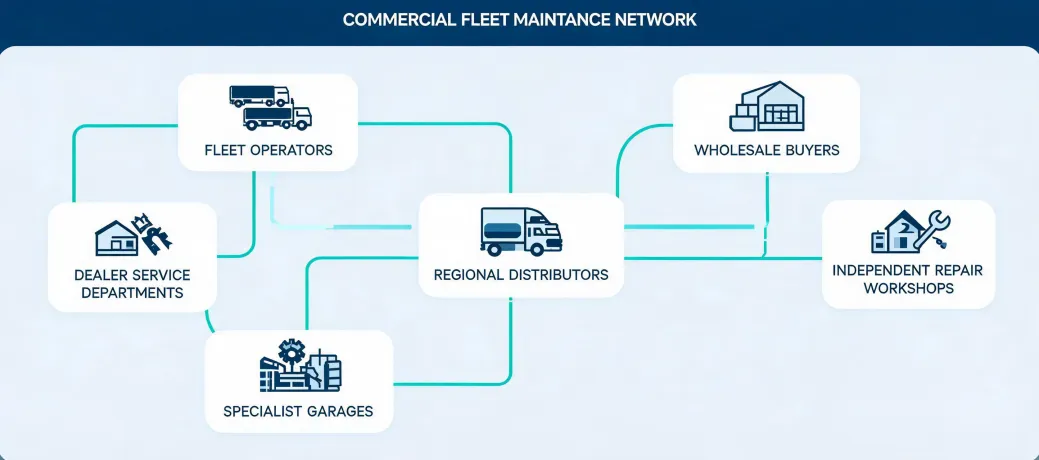
Fleet maintenance groups want uptime logic, distributors need replenishment clarity, and workshops need enough fitment confidence to protect the job. The tabbed structure keeps those differences visible while still using the same three product category families.
Commercial fleet maintenance programs
Fleet teams coordinate planned downtime, multiple vehicles and routine replacement intervals. Gates requests from this group should include vehicle population, maintenance cycle, preferred part families and the timing window for replenishment.
Regional parts distributors
Distributors need to balance coverage depth with shelf discipline. Gates content helps them separate fast-moving belt and hose items from cooling or brake components that may require fitment notes before broader stocking decisions.
Independent repair workshops
Repair workshops work under time pressure and need a clear route from vehicle symptom to replacement family. They benefit from routing diagrams, tensioner context, hose geometry notes and category language that does not drift away from the job.
Dealer service departments
Dealer service teams often need documentation that can be read by both technicians and purchasing staff. Gates inquiry paths keep application and quote details close enough for service advisors to hand off requests cleanly.
Wholesale replacement-parts buyers
Wholesale buyers compare demand across branches, product families and customer segments. They need stable descriptions, category coverage and availability expectations before they approve a larger replacement-parts order.
Specialist performance garages
Specialist garages may ask sharper fitment questions around timing belts, serpentine belts and cooling support. Gates content gives those teams a practical path to document application needs before a technical callback is requested.